Friday, December 18, 2020

Let it snow, let it snow, let it snow!

The First Snow of 2020!

Ah, the first dusting of snow.  I really look forward to it every year, as it paints the landscape in hushed, white flakes.  This year, it really was a dusting:
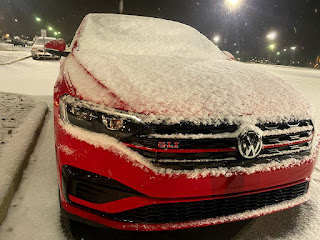


The temperature was hovering just below freezing, and the snow was spectacular.  Big, light, fluffy flakes.  So light and soft that simply blowing on the car window caused the snow to fall off.  Just beautiful.

This was also my first experience in snow with the GLI.  I jumped in, lit the engine, and backed out.  Barely breathing on the throttle, the traction control flickered and the car slid sideways.  "Hmmmm," I thought to myself, "this is going to be a problem."

Our driveway is pretty steep, and sure enough, it was a problem.  On the original equipment tires, I couldn't even make it up the driveway.  The tire tracks show how far I was able to get:


GLI tracks on the left, van with winter tires on the right

It was pretty unnerving, as I slid backwards down the driveway and for a few awful moments thought I was going to hit a car that was parked on the street.  As usual, a loss of traction equals a loss of control.  It reminds of of my favorite Pirelli ad from the 1980s, featuring the great Carl Lewis: Power is nothing without control:


After shoveling off the dusting of snow and sprinkling some salt on the driveway, I was able to make it into the garage.  I enjoy the manual labor of shoveling, as it gives me time to focus and clear my mind.  In this case, I was focused on was traction.  The trail running shoes I was wearing didn't have the traction I needed to shovel, just like the "all season" (3 season?) tires on the GLI were essentially worthless in the snow.

Importance of Traction Rant

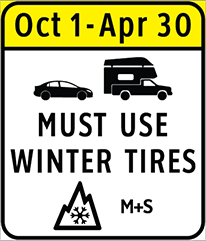
The United States has not mandates around the use of winter tires, despite research showing how effective they are at improving traction, and thus control, when it is cold.  Traction is improved even more on snowy or icy surfaces.  Canada requires winter tires between October and April, and make it known to travelers by posting signs like this:

I suppose in the back of my head, I knew that when I got the GLI I would need to pick up a set of winter tires, but I just kept putting it off.  While shoveling and losing my balance, it became clear that I needed to just get a set as soon as possible.

I was also most curious about the performance of the all weather Cooper tires I had put on the grey van earlier in the spring.  I can hear you thinking, "All weather tires?  Heresy!  What is this nonsense!?"  I suppose some context makes sense here.

Since 1998, I had been switching summer and winter tire on the Passat.  I still remember driving the Passat on summer tires with my brother on 28th street in Cedar Falls, on flat ground, and realizing that it was beyond dangerous to drive on tires like that.  We had gone back to Iowa to visit Mom for the weekend when a snowstorm rolled in.  I remember looking at each other with the realization that if we tried to drive back to Chicago on summer tires, we would be lucky to make it to Dubuque.  The hill into Galena, let alone the twisting two-lane that between Galena and Rockford, would simply not be possible.

That was the first practical realization that tires make all the difference.  They are the only thing connecting a vehicle to the road, so what they are made of and how the tread is designed makes all the difference.  We left the Passat stranded in Iowa, rolled back to Chicago in Mom's Jeep Grand Cherokee, and promptly ordered a set of winter tires on steel rims.

We returned to Iowa the following weekend to pick up the Passat and were amazed at the difference.  From completely incapacitated to capable snow beast, the car had simply been transformed.

I remember a similar experience the first time I drove the Porsche with DOT-legal track tires.  They made the relatively softly-sprung 911 feel like a dump truck on the street.  The sidewalls were so stiff, you felt everything.  Of course, at Blackhawk, the transformation in performance was nothing short of remarkable.  It was most apparent cornering, braking, and accelerating, in that order.  Suddenly, the 911 turned in immediately.  I had been cautioned that the pseudo-race tires were dangerous and unpredictable at the limit.  I didn't find that to be the case at all - instead, every aspect of performance was improved.  When they were hot, they inspired confidence, and made everything about driving on the track more fun.  I thought the breakaway was predictable, though the amount of slip was considerably less.  Simply great tires:


Of course, the track tire rabbit hole gets deep pretty quickly, as suddenly a tow vehicle and trailer start to make lots of sense:


So, tires make a big difference, and I've been a season-specific tire advocate for years.  However, the advances in tire technology, combined with the near-zero value of the Passat after 21 years, led me to try the Goodyear Assurance WeatherReady.  It is an all weather tire that has the gold standard in winter readiness on the sidewall:



The hallowed Three Peak Mountain Snowflake (3PMS) symbol.  There is no doubt that an all-weather tire cannot compete with a dedicated winter tire when the road is covered with snow and ice, but I was intrigued by an all-season tire enhanced to earn the 3PMS symbol.  I also rationalized that winter seems to have evolved towards cold, without too much snow.  In my mind, I could be extra cautious when the snow arrived, making the compromise worth it.

My favorite joke at the time is that I doubled the value of the Passat every time I filled it up, and I ended up ordering a set of Goodyears and couldn't wait for some serious snow.

Unfortunately, we all know how that turned out.  I never got the chance to see how they felt on the car in any serious snow. 

Before the Passat accident, both the all season and winter tires on the grey van were getting to the point where they needed to be replaced.  I decided to keep the grey van to have something to drive until I figured out what to replace the Passat with.   While it needed new tires,  Goodyear didn't make the Assurance WeatherReady in a size that fit.  After some searching, I went with a set of Cooper Discoverer EnduraMax.  Unfortunately, it never really snowed last season, so I was unable to assess their snow performance.

Which (finally) bring me back to the first snow of 2020.  The GLI was safely in the garage, the driveway was plowed, and the streets were incredibly slippery. 

An Abbreviated Comparison Test

With snowy and slippery conditions, I conducted an abbreviated comparison test.  I decided on a short route that took me up a slight grade, down a steeper grade, followed by a slight climb and a tight turn around in a cul-de-sac.  I designed the turnaround to be my poor-man's skidpad, where I could experiment with front end grip.  I was curious to see how much throttle I could use before losing grip.

All-Season Tires

I already knew how the stock GLI tires (Hankook Kinergy GT) were absolutely worthless in the snow.  While they deliver pretty impressive grip for an all season in the summer, they were just non-functional based on my treacherous drive home.  I couldn't get going after coming to a full stop on an incline, and the front end washed out at a walking pace in my "skidpad" test.  I really think we should simply banish the "all season" moniker and call them what they are: three season tires.

Winter Tires

I fired up the blue van an eased down the driveway.  This van was riding on Michelin's excellent Latitude X-Ice Xi2 winter tire.  As experienced last year, they were superb in a snowstorm and were great all season.  Unsurprisingly, they were great in these conditions.  The hill start test passed without fanfare.  On my cul-de-skidpad, I could circle at a pace similar to my regular driving pace.  Color me impressed.  

Coming out of the skidpad, I was behind a Porsche Cayenne of a similar vintage as this one.  We went through a 90 degree right followed by a 90 degree left.  The Cayenne's tail slid out, and not because the driver was trying to have a good time.  He was tiptoeing along and still losing traction.  Meanwhile, I was able to follow confidently, with the Michelins imparting plenty of confidence and grip.  Note to the Cayenne driver - it's not the vehicle that's the problem, it's the tires.

One season in, the Michelins still look like they have plenty of tread left:


This makes sense, as Michelin backs them with a 6 year, 40,000 mile warranty.  I remained thrilled with their performance as the second season gets under way, and I feel reassured knowing that my wife and kids are riding on these in the winter.

All-Weather Tires

After driving the winter tire benchmark, I couldn't wait to try the all-weather tires.  I fired up the grey van, eased down the driveway, and slipped it into drive.  Toeing into the throttle, it was instantly clear that there simply is not as much grip as with winter tires.  Not surprising.  I stopped the van, shifted into second to reduce torque to the wheels, and tried again.  I could get under way, but I needed to use less throttle than with the Michelins.  Again, this made sense.

Going down the steep grade, I tried a panic stop.  ABS pulsing, the Coopers brought the van to a safe, controlled stop.  Again, it took longer than it did on the Michelins, and again, this was not surprising.

Then it was time for the cul-de-skidpad.  I circled three or four times, undoubtedly confusing the neighbors.  Anyway, I had to go slower than normal, and could get the front end to slide without too much effort.

On the hill start test, I could not get going in drive.  I shifted into second and tried again.  The traction light flickered, and I couldn't make progress.  Turning off traction control gave me the wheelspin I needed to get underway.  Not ideal, but I didn't have to back down the hill.

Tire Thoughts

So, the all-weather compromise.  It is clearly a compromise, as the snow performance doesn't compare to a true winter tire.  That said, I think they are a reasonable compromise tire provided the roads are clear.  When covered with snow, you can get around, but you have to be careful.  

There is no substitute for dedicated winter tires.

Selection Time

After parking the grey van, I fired up the Tire Rack website to look for winter tires.  Going with a dedicated winter tire also opens the door for a stickier, more aggressive summer tire after the stock tires wear out.  Heh heh heh.  That could improve the potential traction issues that will crop up when I eventually get an ECU tune to make the turbo work a bit harder.  Heh heh heh.

For me, it was a choice between Michelin and Bridgestone.  Bridgestone's Blizzaks are an institution, with a reputation for supreme snow capability.  I had tried a set of Blizzak WS80s on the grey van.  They delivered great snow performance, and lasted for five seasons.  With Michelin's 6 year, 40K mile warranty, I was leaning towards a set of Michelins for the GLI.

After reading comparisons of the latest WS90 on the Tire Rack's site, it seems that Bridgestone has improved treadlife.  However, the company doesn't provide a treadlife warranty.  However, the WS90 consistently was rated on top, and in Car and Driver's admittedly curated test, came out in front of the Michelin in terms of traction.

I decided to roll the dice and go with the Blizzaks.  I called Tire Rack the next morning, and was delighted to find that instead of the stock 225/45-18, I could get 215/55-17s.  The smaller diameter wheel, coupled with the narrower tire, made me really happy.  In winter time, the narrower the better.  I'm basing that on experience with a Porsche 996 versus a 997S in the winter.  The 996 was an absolute snow monster, largely due to the narrower tires.  While the 997S struggled more than the 996, it did get around just fine:


For the GLI, I picked a rim that was light, simple, and easy to keep clean.  Here's what the combination looks like mounted on the car:


I think the anthracite finish on the wheel looks good, and the tires certainly look purposeful!

Unfortunately, the streets were clean for the relatively short drive home from the Tire Rack, so initial observations are extremely limited.  With that caveat, here are some thoughts after a short drive in 30 degree weather:
  1. The ride is nice and smooth.  I'm thinking that's as much the taller sidewall as it is the tread design.
  2. The tires are a little louder than stock, but not intrusively so.
  3. Cornering and grip felt pretty good.
Visually, I think the entire package works well with the red:


More to come as the season progresses.

Tuesday, November 24, 2020

Mature and Relaxed

After the untimely demise of the Passat, it was time to go car shopping.  I needed something that could comfortably fit 4, fit 5 in a pinch, and could be driven all winter.  My search for vehicles was made simpler because I was looking for something like this:


It's amazing how hard it is to find a car that has a manual transmission, has a bias towards good handling, and that comfortably fits four or five people.  

Contenders

Let's ponder the list of new cars that have manuals available:

Cars with Manuals:

Aston Martin Vantage - no
BMW 2-series - pretty tiny, seeing as my oldest is 6'5"
Chevy Camaro - no
Chevy Corvette - no
Chevy Spark - too small, too uninteresting
Dodge Challenger - no, just not my style, also, looking for four doors
Fiat 124 Spider - no
Ford Mustang - no
Honda Civic Si - possibly, it's a bit small, and I drove one in high school
Honda Fit - no
Hyundai Accent - not interesting to drive
Hyundai Elantra GT - no, hatchback
Hyundai Veloster - no, hatchback
Kia Forte - I'd only be interested in the GT
Lotus Evora GT - no
Mazda 3 - hatchback
Mazda Miata - no
Mitsubishi Mirage - small and uninteresting
Nissan 370Z - no
Nissan Versa - uninteresting
Porsche Boxster - no
Porsche 911 - no
Subaru BRZ - small
Subaru WRX - appealing, and AWD is nice
Toyota Corolla - uninteresting
Toyota Yaris - even more uninteresting
VW Golf - love it, but hatchback
VW GLI - appealing

That's it!  That's the entire list.  I can't believe it's that short.  For someone who really enjoys driving and the engagement that comes with a manual, it's depressingly short, honestly.  With my constraints, I boiled the list down to the Civic, GLI, and WRX.  Ultimately, it came down to the character of the car.

Honda Civic Si

I'll start out by professing my long-standing affection for the Si.  I had the good fortune of driving a 1987 Civic Si towards the end of high school, that looked something like this:


It was a ridiculously fun car.  Light, direct, and an engine that just loved to rev.  I still remember the feel of that gearbox.  I just loved driving that car.  I loved learning how to heel-and-toe, experimenting with skip-shifting, and going for endless head-clearing drives.  I loved the rush to the redline, which I would regularly hit every time I drove it.  It was so tiny, so small, so fun, it brought a smile to my face every time.  I remember physically removing the heavy, glass sunroof and putting in the air deflector on gorgeous sunny days.  The storage space was laughably small with the rear seats up, but I was in high school and didn't care about such things.

It was basically a dream.  Small, light, revvy, and delightful.

The new Si has a different character altogether, with its 1.5T engine.  Gone is the desire to rev.  Also, to my eyes, it's just trying too hard.  I'm not sure what is going on with the rear and its fake air vents.


What's the point?  I just can't reconcile it aesthetically.  Why is the spoiler hanging off the ends of the car?

Also, having lived with the Passat's 1.8 liter turbo for over twenty years, the thought of going to a 1.5 liter turbo didn't appeal.  Irrational though it may be, to me it sounds like too much stress on too little of an engine.

Ultimately, it's just not for me.


Subaru WRX

On paper, I like the WRX a lot.  What's not to like?  Plenty of power, AWD, great value.  For me, it comes down to this:

I know the hood scoop is functional.  I also know that my wife would veto a "snout car."  So, the WRX was out.

Volkswagen GLI

The GLI has been getting good reviews by the automotive media, including Motor Trend and Road & Track.  It has made the Car and Driver 10Best list in 2020 and 2021, and recently won one of their comparison tests.  Everything I read made the car sound enticing.  It has the space I was looking for, enough power for daily use, and is sufficiently economical.  I ended up buying without ever having driven one.  Heck, I never even sat in one!


Mature and Relaxed

After having lived with the GLI for over four thousand miles, I have to say, I'm delighted with it.  It has enough performance to keep me interested, and more than I really need to just get around on a daily basis.

What does it for me about the GLI is that it is a complete package.  There is no one category in which it is outstanding.  However, it slightly over-achieves in every area.  The engine is potent enough, the brakes are powerful and progressive, the LED headlights light up the night, the heated and cooled seats keep my backside happy, and the massive moonroof is a delight.  I know that the roof adds weight to the detriment of overall performance, but for me it's a function of mission.  I don't need maximum performance from this car - I want something that is quick and fun to drive with a set of features that delight in daily use.  With that mission, the car is just wonderful.

The Si I drove as a teenager was a teenager itself - playful, fun, raw, and with an engine that just begged for the redline.  The GLI is more like an adult - capable and understated, confident without trying too hard.

Looks

I think visually, the GLI looks great.  Aggressive simplicity is the name of the game, with nicely-creased sheet metal:


I really like the detail on the hood:


I think the red has something to do with it as well.  I figured that with all the crazy events going on in 2020, the world needed a bit of cheerfulness, so I went with red.  I think Volkswagen does a great job with its red - bright and vibrant.  I also think it plays well with the red GLI badging and stripe on the grill.

Chassis

The chassis is delightfully playful, and it has a lot to do with the steering.  The GLI has a variable-ratio electrical rack and a mere 2.1 turns lock to lock.  This makes it feel playful and aggressive, particularly on initial turn in.  When stringing together a series of corners on Michigan's beautiful back roads, the playful feeling brings a big smile to my face.  Just a bit of wrist effort makes the car turn in right now.

The suspension is on the taut side.  Traversing the washboard interstates of Michigan, you hear and feel the texture of the road.  I think it feels communicative and wonderful, though I can see where some people might perceive it as too stiff.  When the road gets twisty, the chassis remains composed, giving a sense of confidence and grip.  For example, driving to Chicago, merging off the Skyway and onto the Dan Ryan, there is a hump in the left lane before a downhill left/right combination.  Watch the taillights in front of you and you can see softly-sprung cars pogo.  Not the GLI - it feels composed and ready for the turn.

Driving hard, the GLI has lovely balance.  You do have to be aware of weight transfer.  For example, entering a roundabout, you have to be patient and wait for the weight to transfer before really getting on the power.

Speaking of power, I have to give tribute to the front limited-slip differential.  Torque steer is just gone.  Compared to the Civic of my youth, the GLI is understandably on another planet.  I can get on the power very early, and the GLI just puts it down.  It handles better than any front-wheel drive car should.  You can feel the differential working when coming out of low-speed, second-gear corners.  Hard on the gas, there is a flicker of traction control.  The power just flows without upset the chassis.  It feels great.

The only time when I find myself acutely aware of the which wheels are putting the power down is hard acceleration in first gear.  There's enough torque to light up the front tires, and with the weight transferring rearward, I find myself shifting into second before giving it full throttle.

Engine and Transmission

The engine goes about its business quietly, efficiently, and effectively.  With its abundant and available torque, it doesn't beg to be revved like the Civic Si of my youth.  More frequently, I find myself short-shifting and surfing the wave of torque.  It feels punchy above 2,000 rpm.  Toeing into the throttle at 2,500 rpm in third results in a delightful and deliberate surge.

It's also quite efficient, if you don't stand on the throttle too much.  For example, check out the mileage on one interstate journey:


36.4 mpg in a car this fun?  It's amazing to me, quite honestly.  Naturally, gearing plays a big role here.  In 6th at interstate speeds, it's turning between 2,200 and 2,600 rpm, sipping fuel.  Get on the throttle, the turbo is already spooled up, and you just get smooth, usable thrust.

I also think the relatively steeply raked rear window contributes favorably to slipping through the wind.


The low interstate rpms lead to a relaxed, enjoyable cruising experience.  The engine provides plenty of thrust without being intrusive, the wind noise is muted, and the enormous moonroof makes the cabin feel bright and airy.


I think the engine contributes to a feeling of relaxation when driving.  It's possible to redline, but why?  Just shift around 5,000 rpm and enjoy the surge of torque when enjoying a spirited drive.  For just puttering around town, shifting at 2,500 rpm keeps the turbo spun up and ready for torque duty.

Compared to my departed Passat with its chipped 1.8T, the extra torque in the GLI is noticeable everywhere, and the additional cog in the transmission transforms interstate cruising from a 3,000+ rpm strain into a much more sedate 2,300 rpm affair.

With the relatively muted engine noise and bountiful torque, the GLI collects and maintains speed with ease.  Cruising at triple digit speeds feels effortless.  This is potentially problematic, as if you don't pay attention to the speedometer, you can look down and find yourself going 10+ over the posted limit without trying.  Keep your foot in it, and the 120+ comes up quickly.  The entire time, the machinery feels unstressed and capable, planted, and comfortable.

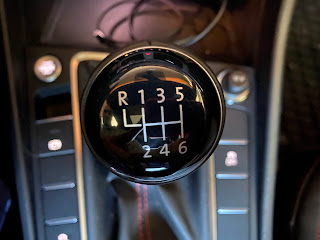
From a feel standpoint, the gearbox reminds me of a 996 generation Porsche 911. Relatively short throws, six speeds, it feels great.

Brakes

It's no secret that I have a thing for big brakes.  Equipped with the front rotors from the Golf R, there is plenty of stopping power, with good initial bite.  The brakes are sufficiently strong to haul the GLI down from triple digit speeds with ease:


Exterior Lights

It's also no secret that I have a thing for great headlights.  I fantasize about the matrix LED headlights on the S-class Mercedes my brother and I rented in France, able to project pixels onto road signs while not blinding oncoming traffic.  Amazing lights, amazing safety feature!


The GLI comes with LED lights, front and rear.  


At night, the result is is clean, even light.  The high beams throw a lot of light down the road.  While there is a bit of a break between the low and high beams, the overall illumination experience on a dark road is good. 
Delighters

There are so many little details about the GLI that delight the senses.  Savoring the details, you can tell that the GLI was finished by people who like cars and enjoy driving them.

Aesthetically, I really like the chromed exhaust tips, as it brightens up the back of the car.  A small detail, but one I appreciate.


I really like the red LED on the door sill, as well as the red stitching present throughout the cabin:


I think it's ridiculously cool that the honeycomb pattern on the floor mats matches the pattern in the grill:


I also like the customizable ambient lighting throughout the cabin.  While it is adjustable across the spectrum of colors, I prefer red.


I also appreciate how the CarPlay screen and the rest of the controls are angled slightly towards the driver.  It's a small thing.  I've come to appreciate how much better this design is for the operator after being in our Odyssey, where the screen and controls are perpendicular to the driver.  In the GLI, it's just another detail that speaks to the driver-focused nature of the car.


I also appreciate how it's possible to pull the moonroof shade even with the moonroof open.  That may sound silly, but with a bald head it's sometimes nice to block the direct sun while still getting fresh air in the cabin.

One touch everything!  All four windows and the moonroof have one touch open and close.  I love it!  Long gone are the high school days of reaching across the car and cranking madly to get the passenger window down.  One-touch from the driver's seat?  What luxury!

The GLI has a big trunk.  At 14.1 cubic feet, it's a bit smaller than the 14.9 cubic foot trunk of the Passat it replaces, but there is plenty of space.

I've enjoyed heated seats for years, but cooled front seats?  I thought they were a bit of a gimmick, until I used them on a hot day.  They are a nice feature, and fit with the mission of delighting on a daily basis with the knowledge that the GLI will never see a race track.

The GLI comes with rain-sensing wipers. Never something that I’ve had before, but I have to say, very convenient. Again, consistent with the mission of being something that delights me every day.

The subwoofer adds a richness to the stereo, though it does get a bit buzzy at higher volume.

A Budget A4?

Car and Driver said in a recent comparison test that "...the Jetta GLI drives like a budget Audi A4. It does everything right when cruising, tracking straight and damping impacts from expansion joints and cracks while maintaining a hushed cabin. Its tall gearing allows the 2.0-liter inline-four to spin at 2500 rpm at 80 mph."  

I happened to park next to an A4 the other day, and captured a few comparison shots:


The family resemblance is clearly there:

You can see the difference in rear window rake pretty clearly:


The A4 is a wonderful car with a delicious interior.  Why did Audi stop making it with a manual?  While it's no penalty box, there's no doubt at all that the GLI's interior is not nearly as nice as the A4.

Potential Improvements

Is the GLI perfect?  No.  Nothing is.  So, what would I change, keeping the mission of the car in mind?

It's a small thing, but it drives me slightly insane.  Can you see it?


Why, why, why?  Nice, even 20 mph increments, until 140.  Then it jumps to 180?  Even though the only way the GLI would see 180 mph is if fell off a cliff, the 40 mph jump implies a nonlinearity to the sweep of the digital needle.  This drives me crazy.  Once you see it, you can't unsee it.  Volkswagen, please just fix this with an update.

Another nit - the post-trip summary and its little animation on the dashboard is cool...but why use a standard Jetta for the animation instead of a GLI?


I'd go a step further and add a bit of code to make the car on the dashboard the same color as the body of the car in which it's deployed.  If that's asking a bit too much, then at least replace the Jetta icon with a GLI.

I would get rid of the "sport" setting that pipes in engine sound via the sound system.  What's the point?  Why make it artificial?  Beyond that, at high volume, it interferes a bit with the sound system.  I ended up finding my happy spot by configuring the differential and everything else to sport, but not piping in the fake engine sound.  With this setup, I can hear the turbo spool up, particularly with the windows down.

The heated and cooled front seats are a delight.  However, a heated steering wheel and heated rear seats are not available as an option.  This makes no sense to me, as they are available on other Jettas.  Why not?

I know that you can get summer tires from the factory.  I'm going to see how the all-seasons do this winter, but judging from January's trip north, it's entirely possible a good set of winter tires is in the cards.  If that happens, I'll be replacing the all-seasons with performance tires after they wear out.

With the rear camera, I appreciate the guiding lines...but how hard would it be to add the software that adjusts those lines based on steering wheel input?  That's a feature on the Odyssey that should be on the GLI.

The trunk - why does it have rigid, space-eating hinges instead of struts?  I know they are more expensive, and in my opinion, worth it.  I loved having them in the Passat, and that car was from 1998.

In the US, the GLI is limited to 126 mph.  Why?  It is certainly not a capability issue, as the car is still pulling strong in fourth gear into the 120s.  Just let the car run ungoverned to its top speed, or at least provide experiential parity to what's available in Europe with the 155 "gentlemen's agreement."

In the power department, how much is enough, and how much is too much?  As I noted above, the GLI has sufficient power to keep things interesting.  However, based on the significant improvements I enjoyed from chipping the Passat, I do find myself daydreaming about an APR Plus upgrade at some point.  I would go for the most mild tune, bumping horsepower from 228 to 290 and torque from 258 to 320.  No other parts would change, it would just be asking the turbo to work a bit harder.  I like sleepers.

Parting Thoughts

Details, or lack there of, convey passion.  There are plenty of little details on the GLI, conveying that passion for vehicles is alive and well at Volkswagen. 

The GLI makes me feel relaxed and happy every day.  It has good power, and everything about the complete package makes me feel like the machinery isn't stressed.  It just goes about its business, quietly, competently, and powerfully.  In the 911, not a drive goes by where I don't zing it to the redline.  It sounds great.  It rushes for the redline eagerly.  In the GLI, horsepower peaks around 5,000 rpm, after which the rush tapers.  So why bother, especially when puttering around town?

Just relax.

Shift early.

Relax...there is plenty of torque there for you.

That's right.

Enjoy the light from the heavy, performance-sapping moonroof.

Turn up the stereo and enjoy the bass from the subwoofer.

Delight in the tiny details that make the cockpit enjoyable.

And take the long way home by the twistiest route possible.

Wednesday, November 18, 2020

Early Fall Foliage

 It's been a pretty intense semester thus far.  Finding myself with a day in which the family was out of town and I didn't have any teaching obligations, I decided to go searching for the colors that define fall.  I also haven't had the motorcycle out, and felt I needed to rectify that situation.

After some loose planning, I defined my goals for the day:

  1. Blow the cobwebs out of the FJR.
  2. Find beautiful colors.
  3. Be home before dark.
With those objectives in mind, Michigan provided the most promise in terms of places to explore that are close to home.  I know there are some beautiful forests north of Grand Rapids, and set Traverse City as an initial destination into the GPS.

It was just before 6 am when I backed quietly out of the garage.  Looking up, I was bathed in the most beautiful moonlight:


It was also a brisk 46 degrees, so I zipped up my suit, fired up my heated grips, and started rolling north.

I had almost forgotten how much I really enjoy riding at night.  The moon shadows were overwhelmed by headlights of the vehicles I passed as I flowed with the road.  The bite of the wind reinforced my perspective on the ability to control air flow.  For a long-distance ride, I simply don't want to go back to the world of static wind management.  

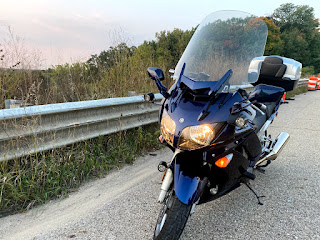
In the quest for perfecting airflow management, I put a California Scientific windshield on the FJR a couple of years ago.  It is a massive improvement over stock wind management.  Being tall, I got one roughly the size of a barn door, with a light grey tint.  


When it is all the way down, the airflow hits me right around the neck.  All the way up, I can tuck in behind the screen and I'm in a perfectly still pocket of calm air.  It's so still that I can flip up by Schuberth and take a drink.  It really is a great screen.

Anyway, on that cold, dark morning, the grips kept my hands toasty and with the shield up, I could focus on the interplay of the moon and headlight shadows as the miles quickly disappeared into the rearview mirrors.

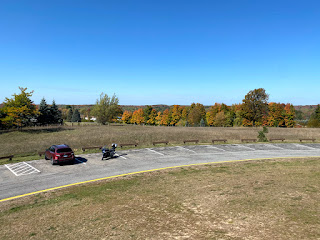
By the time I got to Grand Rapids, the sun was rising, so I stopped for a quick picture:


Accelerating away from this picture stop, I was reminded that it was cold outside and the FJR doesn't have traction control.  I wasn't accelerating that hard, and I still spun up the rear tire.  The bike yawed slightly to the right, I backed off, and continued on my way.  It was a good reminder that you can never, ever stop paying attention when your on a powerful vehicle.  Riding (or driving, for that matter) a powerful machine requires respect of what the machine can do.  It also requires an understanding and an appreciation of the fact that cold temperatures and cold tires don't mix.  You just don't have the same grip as you do when the temperatures are high and the rubber is nice and hot.

Speaking of cold temperatures, I remember being at Lago di Garda on a chilly spring day.  There were groups of enthusiastic, leather-clad sportbike riders hanging out.  They mostly seemed to be in groups by manufacturer.  Anyway, one of the groups decided to roll out.  The lead rider revved up his bike, turned out, and hit the throttle.  The cold tire immediately spun up, tossed him off, and sent the bike spinning across the road.  He was most sheepish.

I think the modern electronics really are a great invention in terms of reducing risk due to a heavy throttle hand.  I recently spent some time on my brother's BMW K1600GT.  I cracked the throttle wide open in first, the front came up a bit, the power was reduced, the front came down, and I was on my way.  The intervention is more noticeable than on his Ducati Monster, where you can essentially dial in the amount of wheelie you want.  Really, modern electronics are truly amazing, and riding without them makes you acutely aware of the fact you're working without a net.

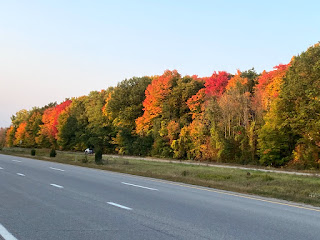
Riding north with the sun coming up, I started to find the gorgeous fall colors I was looking for:


I didn't really have an idea as to where I wanted to go, so I plugged in Elk Rapids as a little town north of Traverse City.  Once past Cadillac, I wound my way along delightfully deserted two-lane highways.  The road got more interesting, the sun was fully up and warm, and I was enjoying loafing along in fifth gear, with the occasional downshift to third for a spirited overtake.

Eventually, I rolled into Elk Rapids, and found this beautiful tree:


Looking at my watch and the sun, I figured I could do a little loop up to Northport before winding my way south on Michigan 22 and 109, past Sleeping Bear Dunes.

Rolling south from Elk Rapids, I picked up M22 and headed north.  I never get tired of looking at the beautiful, clean water around northern Michigan:


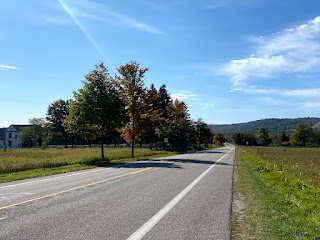
As I headed south on M22 towards 109, the scenery confirmed that I was a bit on the early side to capture fall in its full splendor:


My ride south was just gorgeous.  The temperature was in the mid-fifties and the sun was bright.  I love riding in that kind of weather, when you don't have to contend with excessive heat and it's warm enough that you don't feel cold.  It's just perfect - not too many bugs, a touch of heated grips, and nothing but miles stretching before me.

South of Cadillac, I decided to pull off and see how the trees were doing.  You could tell they were on their way:


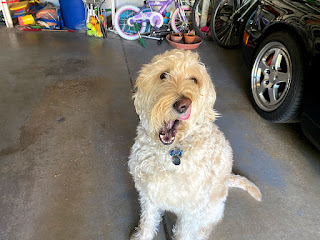
When I got home, someone was very excited to see me:


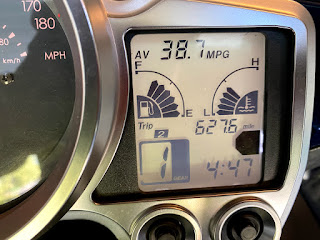
All in all, a very nice day, with almost 630 miles in the rearview:


As usual, I kept a Spotwalla trace of my rambles, which you can see here.

Monday, January 6, 2020

Helpful, not autonomous, vehicles

A new van recently made its way into our garage.  It is loaded with Honda's latest suite of driver-assistive technologies called Honda Sensing.  I have to say, it's a great set of safety-related technology, and includes:

  1. Collision Mitigation Braking System - designed to reduce impact when a collision is unavoidable.
  2. Road Departure Mitigation System - designed to keep the vehicle in its late.  I like to think of it as "sneeze protection."
  3. Adaptive Cruise Control - maintains a specified distance behind a vehicle.  So, set the cruise at 70 mph, and if a car slows down in front of me, the van slows down.  The car in front speeds up, the van speeds up.  Nifty for semi-urban or busy interstate environments.
  4. Lane Keeping Assist System - applies subtle steering corrections to keep the van centered in its lane.
  5. Blind Spot Information System - detects a car in my blind spot.
  6. Cross Traffic Monitor - gives a warning in reverse when a vehicle is approaching from the side.
  7. Auto High-Beam Headlights - Automatically manages high beams at night above a certain speed.
All of these are fantastic features, and are downright useful.  Driving back from Chicago, the Adaptive Cruise Control performed well.  The Cross Traffic Monitor is super helpful in parking lots - inching backwards, if a vehicle is approaching for either side, you get an audible alert and directional arrows on the center screen indicating where the vehicle is coming from.  The Blind Spot Information System does its job, and the Auto High-Beam Headlights are great at night on dark roads.

That said, as a human, I can see further ahead and anticipate better.  I turn off the bright lights a bit sooner than the automated high beams.  I rarely use the brakes on the interstate, while the ACC system brakes comparatively frequently.

And then, there is weather.

I recently completed a 300 mile drive in a winter storm, on snow-packed interstates.  The lane markings were just gone, with only relatively sparse road-side reflectors giving a visual indicator as to where the lane ended.


As I drove along, the following warning appeared on the dash:


That meant that anything relying on forward-looking radar was off duty.  Collision mitigation and adaptive cruise (which I would never use in this situation anyway) were on break.  When I stopped for gas, the reason for this warning became evident.  The front of the van was covered in a slushy, icy glaze:


Fortunately, I had mounted a set of Michelin winter tires before this trip:


The Michelins did their job admirably, providing traction and a clear indication, typically accompanied by a flashing traction control light, when traction was insufficient.

Which brings me to the end of the story:


Technology is a wonderful thing.  As a species, we have created systems that help improve our lives and help keep us safe.  However, it is naive to think of them as replacements for human judgement or attentiveness.

My moniker for the Lane Keep Assist and Road Departure Mitigation systems is "Sneeze Control."  Don't think that because these systems are in place and functioning that it gives you license to text, or otherwise divert your attention from the task at hand: driving.

While there is no doubt that Tesla's "Autopilot" is more complete, my perspective is the same: it's about helping the humans, not replacing what we do.  I believe "Autopilot" is a misnomer - it's much closer to "sneeze control," especially when the weather turns south.

Embrace technology as an assistant and tool, not as a colleague or friend.  I'm certainly not ready to trust it with my life, or the lives of my family.